When most people think about electrical inspections and electrical work, they picture a qualified electrician working through a checklist, testing circuits and checking consumer units the traditional way with traditional tools.
It is thorough, it is necessary, and it has served the industry well for decades. But there is one fundamental limitation with conventional inspection methods: they can only find what they can see or directly test. Thermal imaging changes that entirely.
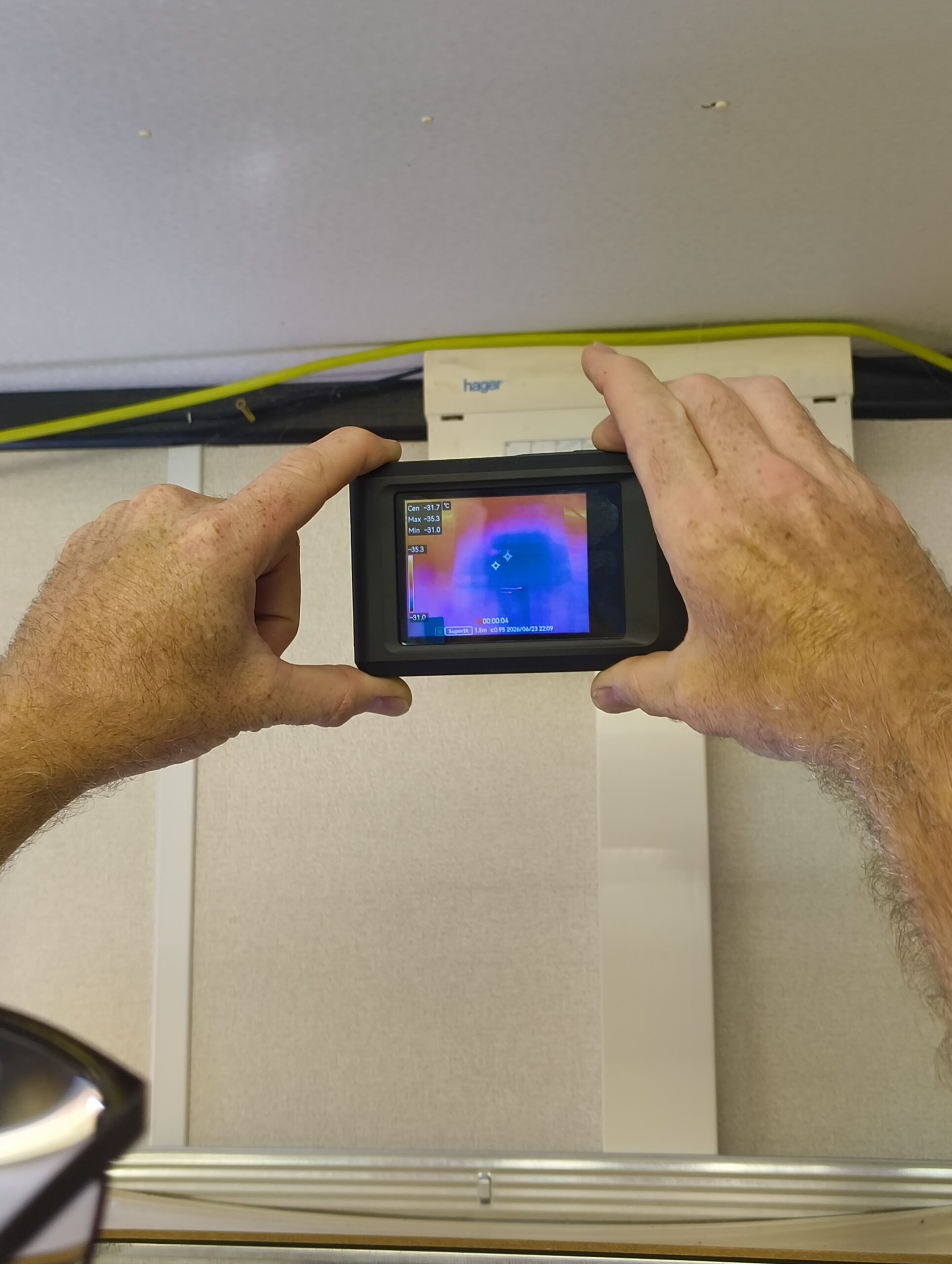
Our electricians have recently been given thermal imaging cameras to use as part of their toolkit, and the difference it makes to the quality, speed and depth of an inspection is significant. Here is a closer look at what the technology does, why it matters, and how it benefits both homeowners and businesses alike.
What Is Thermal Imaging?
A thermal imaging camera detects infrared radiation, which is essentially heat, and converts it into a visual image. Every electrical component generates some level of heat during normal operation, but when something is wrong, a loose connection, a corroded terminal, an overloaded circuit, it generates more heat than it should. That excess heat shows up clearly on a thermal image as a bright hot spot, often long before any visible sign of a problem appears, and long before a fault becomes dangerous.
When Cold Is the Problem
It is also worth noting that thermal imaging works in both directions. While hot spots are the most commonly looked for thing, unusually cold areas can be equally telling.
- Broken or Open Circuits: A wire that is broken or disconnected will appear cold.
- Defective Components: Components that are not drawing power as intended.
- Blown Fuses: A blown or failing fuse will appear cooler because it is not passing current.
This is precisely why interpreting thermal images requires a trained and experienced eye. The camera captures the data, but understanding what that data means, whether a temperature reading is a warning sign or simply normal behaviour for that component, is where the expertise of a qualified electrician becomes essential.
Catching Problems Before They Become Emergencies
The most important benefit of thermal imaging is what it does that traditional inspection simply cannot: it identifies faults in their early stages. A loose connection that is gradually worsening, a section of wiring under sustained overload, or a corroded terminal on a distribution board will all produce a heat signature that flags a problem is developing. Catching these issues at this stage means they can be resolved quickly and affordably, rather than waiting until they cause a component failure, a tripped system, or in the worst cases, an electrical fire.
For homeowners, this is genuine peace of mind. For businesses, it is the difference between a planned maintenance visit and an emergency callout at the worst possible time.
No Downtime, No Disruption
One of the most practical advantages for commercial and industrial clients is that thermal imaging is entirely non-contact and non-intrusive. Inspections are carried out with the electrical system live and fully operational, meaning there is no need to shut down machinery, production lines, server rooms or retail operations to carry out a thorough check. For a busy factory, office or retail environment, that is a significant saving in both time and money.
Faster, More Accurate Diagnosis
Rather than testing individual components one by one, a thermal imaging camera allows a technician to scan an entire consumer unit or electrical panel in seconds and immediately see whether anything is running hotter than it should. Faulty components, overloaded circuits and phase imbalances all reveal themselves almost instantly. This makes the inspection process faster, more comprehensive and considerably more accurate than traditional contact-based methods alone.
Keeping Our Engineers Safer
Electrical work carries inherent risks, and arc flash, the sudden release of energy caused by an electrical fault, is one of the most serious hazards an electrician can face. As thermal imaging allows our engineers to carry out detailed inspections from a safe distance, without needing to open live panels or make direct contact with energised components, the risk to personnel is meaningfully reduced. Safer working practices benefit everyone.
Uncovering What Standard Inspections Can Miss
Some of the most valuable findings from a thermal imaging inspection are the ones that would simply never show up any other way. Damaged wiring insulation, hidden moisture ingress behind walls or ceiling surfaces, and developing faults are all invisible during a standard visual inspection. Thermal imaging surfaces these hidden issues and allows them to be addressed before they escalate.
A Powerful Tool, Not a Perfect One
Thermal imaging is a remarkable addition to any electrician's toolkit, offering faster, deeper and far less intrusive inspections than traditional methods alone. However, it is important to be transparent about its limitations.
Thick walls, solid stone or tiled surfaces, heavy insulation and reflective materials can all reduce the effectiveness of thermal readings, as they either absorb, block or distort the heat signatures the camera relies upon. In these situations, thermal imaging may not tell the full story on its own.
This is why it works best as part of a complete inspection approach. Visual checks, manual testing and the expertise of a qualified electrician remain essential, and thermal imaging enhances that process rather than replacing it. Used together, these methods give the most accurate and thorough picture of an electrical system's health.
Electrical safety should never be left to chance. Thermal imaging gives us the ability to look deeper, act earlier, and protect the homes and businesses we work in more effectively than ever before.
Interested in a thermal imaging inspection? Get in touch with our team today.